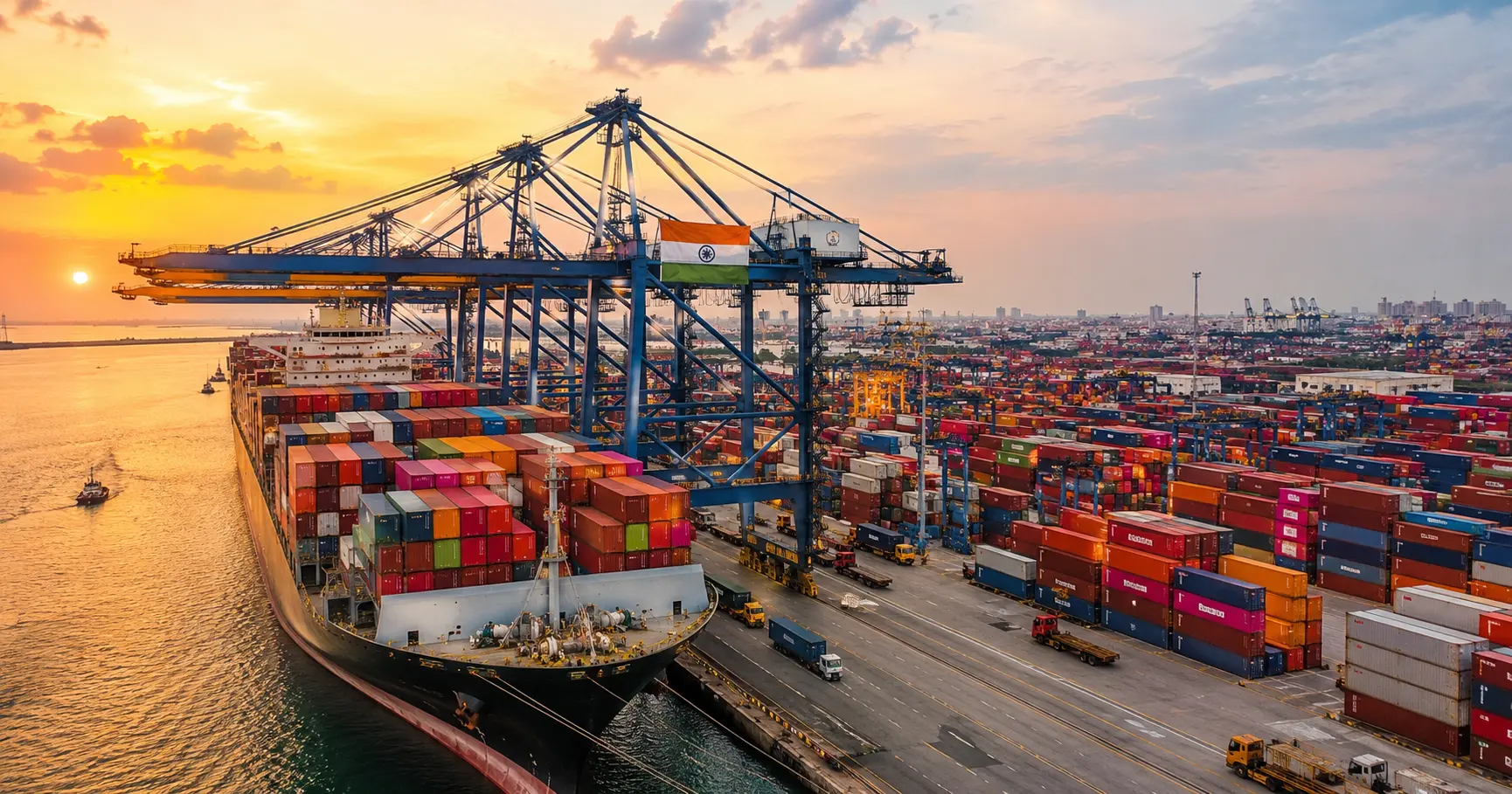
India is now a global trade powerhouse. India's total exports in FY 2025-26 are estimated at US$ 860 billion — growing 4.22% year on year — and the country is chasing the historic $1 trillion mark. If you've ever wondered how this giant machine runs, or how you could join it, this guide breaks it all down.
What does "export" actually mean?
Export simply means selling goods or services produced in India to buyers in other countries, in exchange for foreign currency. It splits into two types: merchandise exports (physical goods like petroleum, machinery and rice) and services exports (IT, consulting, finance). Both earn India valuable foreign exchange and power the economy.
The major giants of Indian exports
India's biggest export earners are clear. Refined petroleum products, polished diamonds and gems, pharmaceuticals, iron and steel, and rice together account for roughly 35% of total merchandise exports. Engineering goods top the list, worth about $116 billion — nearly 27% of total exports.
The fastest-rising star is electronics: it has climbed from the 7th-largest export category to the 3rd-largest and fastest-growing, and smartphone exports in the first five months of 2025-26 touched ₹1 lakh crore — a 55% jump.
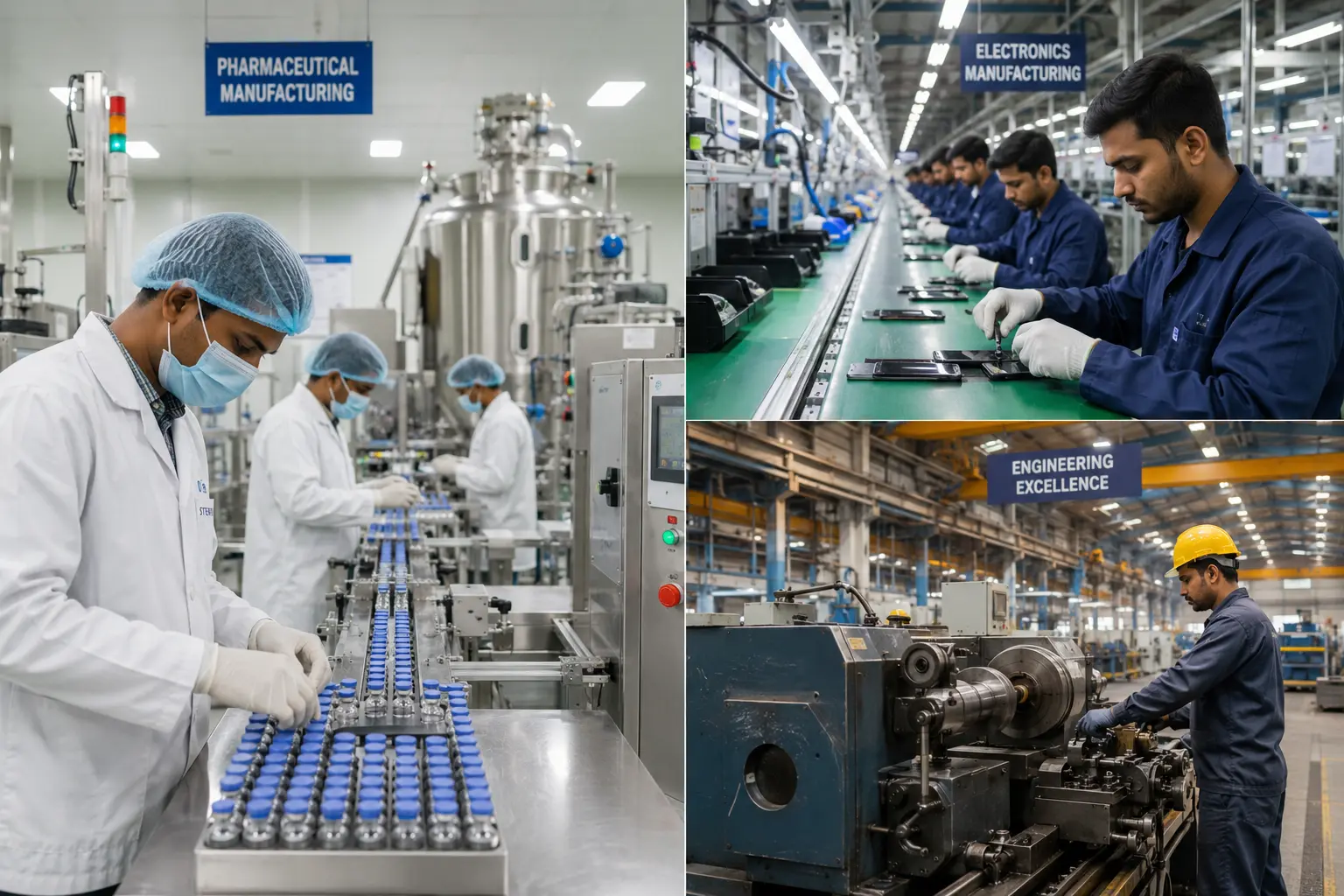
What products are exported most from India?
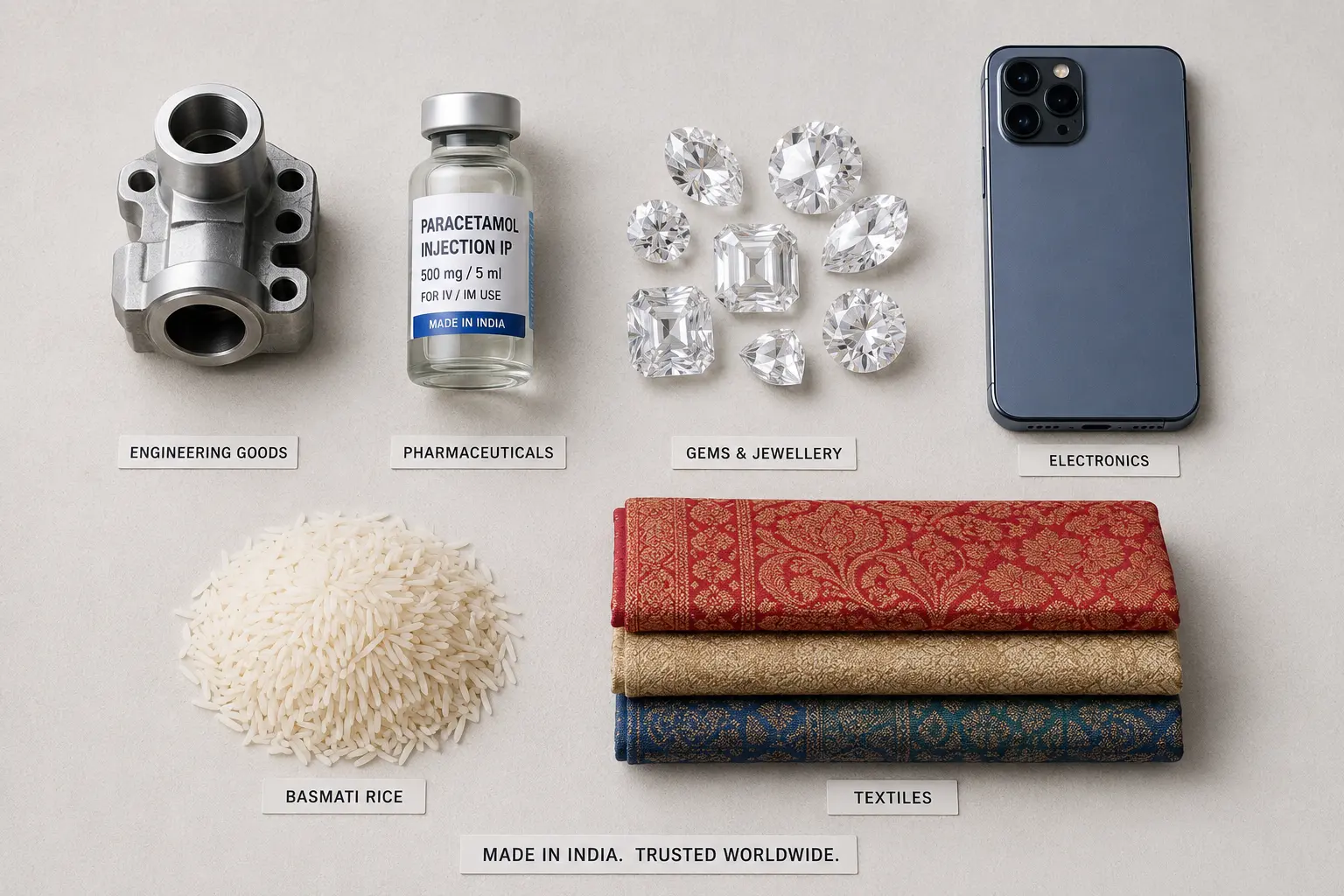
The leading export products in 2026 are:
- Engineering goods — machinery, auto parts, transformers
- Petroleum products — India is among the world's top refiners
- Electronics & smartphones — the fastest-growing segment
- Pharmaceuticals — the "pharmacy of the world"
- Gems & jewellery — especially polished diamonds
- Rice, spices and agricultural goods
- Textiles and apparel
Top destinations include the USA, UAE, Netherlands, China and the UK.
Which government authority makes exporting easier?
Several bodies exist specifically to help exporters — and knowing which does what saves weeks of confusion.
- DGFT (Directorate General of Foreign Trade) — issues your licence and frames trade policy.
- EPCs (Export Promotion Councils) & FIEO — provide market intelligence, buyer connections and access to incentive schemes.
- APEDA, Spice Board, Pharmexcil — sector-specific councils that guide and certify exporters.
- ECGC — provides export credit insurance to cover payment risks.
Which authorities tend to cause delays?
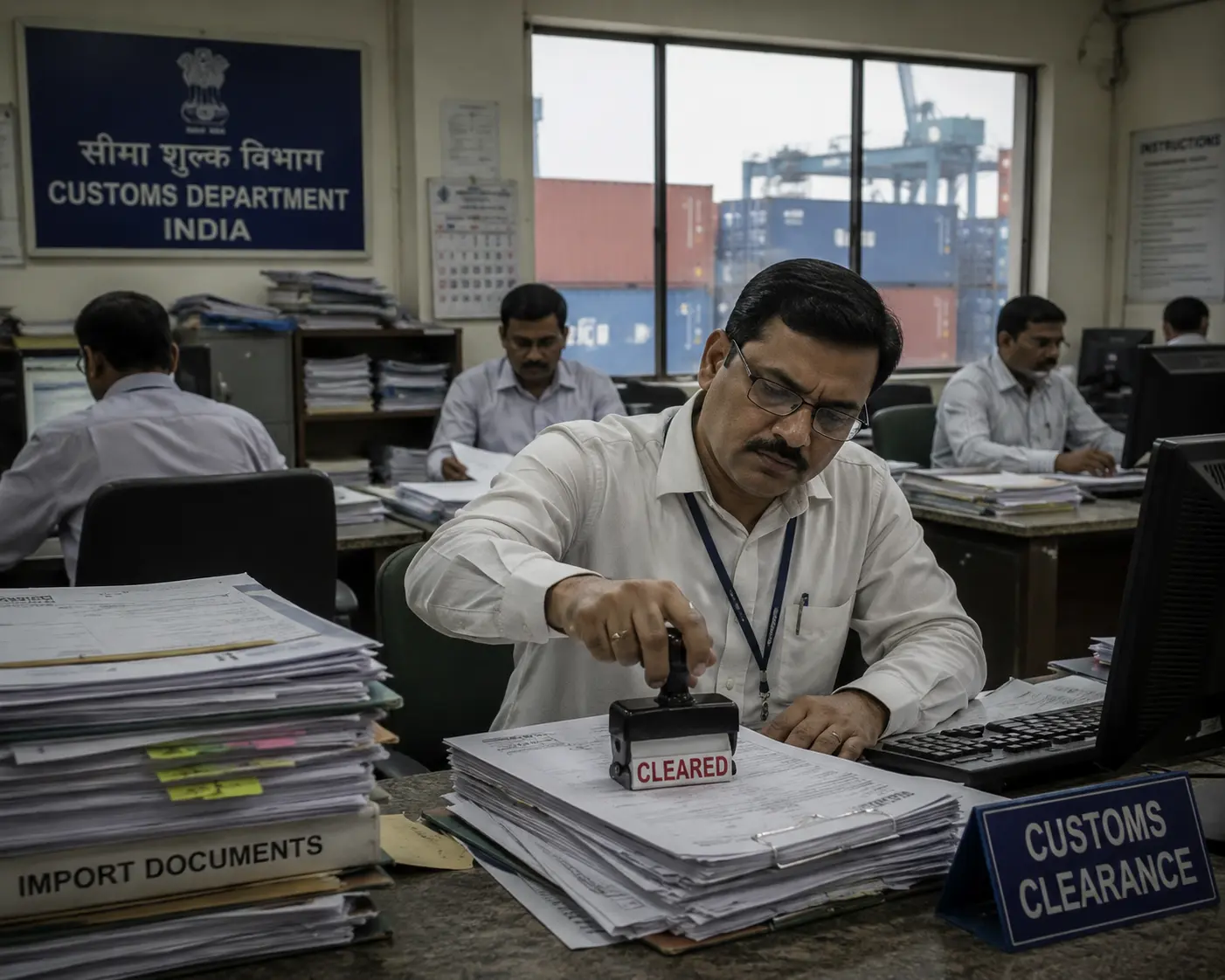
Honestly, the friction usually comes from customs clearance and port-level paperwork. New exporters frequently get stuck on AD Code registration at each port, shipping bill mismatches and GST refund delays. Inspection and documentation backlogs at busy ports can also slow shipments. The fix is clean, accurate paperwork from day one — most delays are paperwork-driven, not policy-driven.
How can an amateur start an export business on their own?
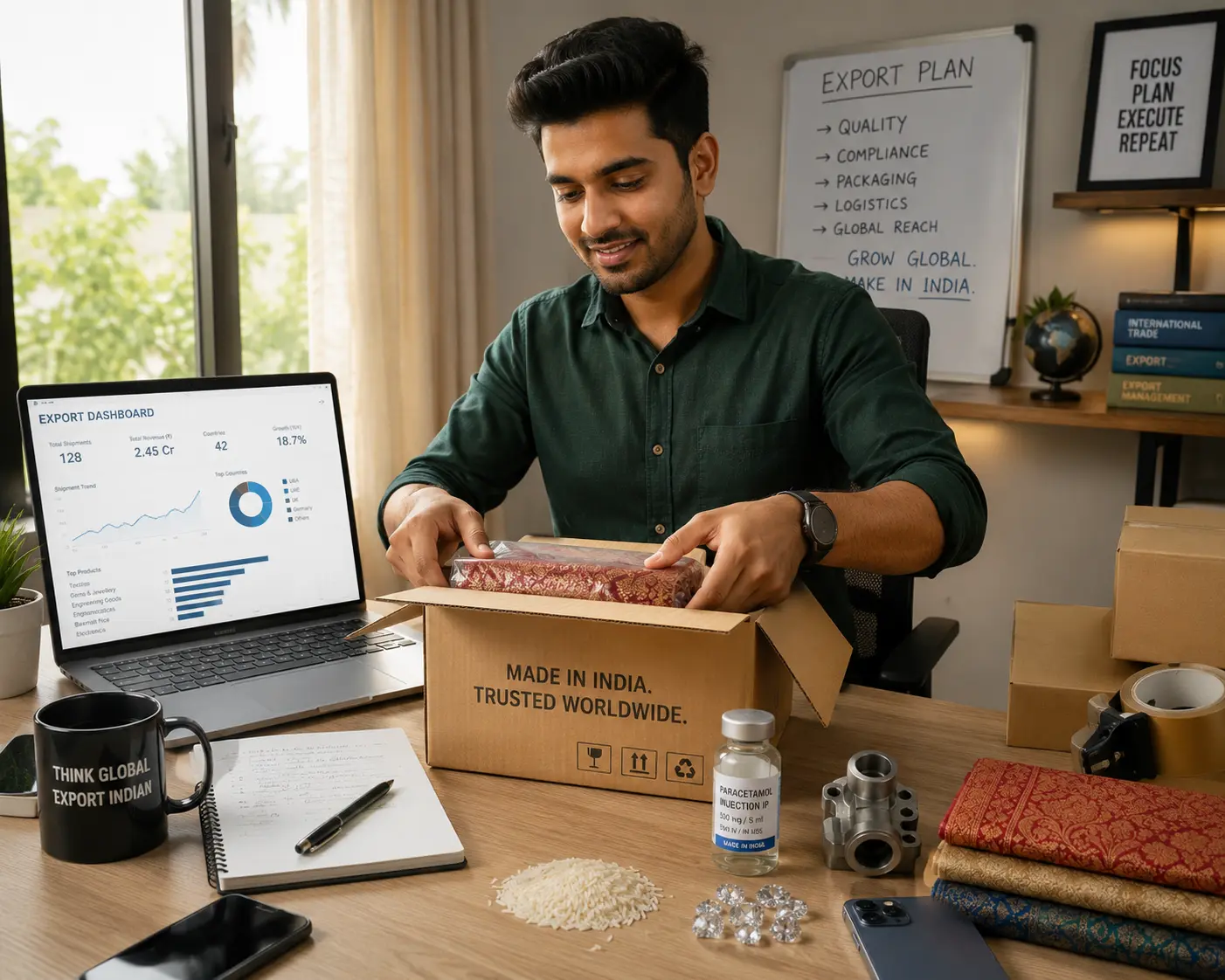
- Set up your business — register a firm/company and open a current bank account.
- Get a PAN card for the business entity.
- Apply for IEC (Importer-Exporter Code) on the DGFT website — upload PAN, Aadhaar, bank details and a photo, pay the fee, and DGFT issues it electronically. The IEC is valid for life, but annual profile updates are mandatory or it can be deactivated. The government fee is just ₹500. See our IEC registration guide for the full walkthrough.
- Obtain RCMC (Registration-cum-Membership Certificate) from the relevant EPC or FIEO to unlock Foreign Trade Policy benefits. FIEO covers general exports; APEDA covers agricultural products; the Spice Board covers spices.
- Register your bank's AD Code at each customs port you'll ship from — it links your bank account to the customs system.
- Pick a product and target market, find buyers, send samples, price competitively and cover payment risk with ECGC insurance.
Where do you gather information to become an exporter?
Stick to official, reliable sources: the DGFT portal (policy, IEC, e-RCMC), your relevant Export Promotion Council, FIEO for multi-product exporters, and DGCI&S for trade data. Customs regulations and trade policies change constantly, so check the DGFT website regularly and consult experts for ongoing compliance.
What difficulties do Indian exporters face?
The common pain points are: navigating constantly changing compliance rules, customs and documentation delays, GST refund and working-capital pressure, foreign-exchange and payment risk, intense global price competition, and meeting the quality and regulatory standards of destination countries.
The bottom line

Indian exports are booming, the rules are increasingly digital, and the entry barrier has never been lower — an IEC costs ₹500 and you can begin from home. Master the paperwork, pick the right product, lean on the DGFT and EPCs, and you can build your own slice of India's $860-billion export story.